

Pick Modules
Pick Modules: Multi-Level Fulfillment Engineered for Speed
Engineered multi-level systems that combine racking, conveyors, and flow lanes into a high-efficiency fulfillment operation.
2–4 Levels
Pick and reserve in one structure
2×+ Picks/Hr
Vs. flat-floor operations
Up to 40'
Full clear-height utilization
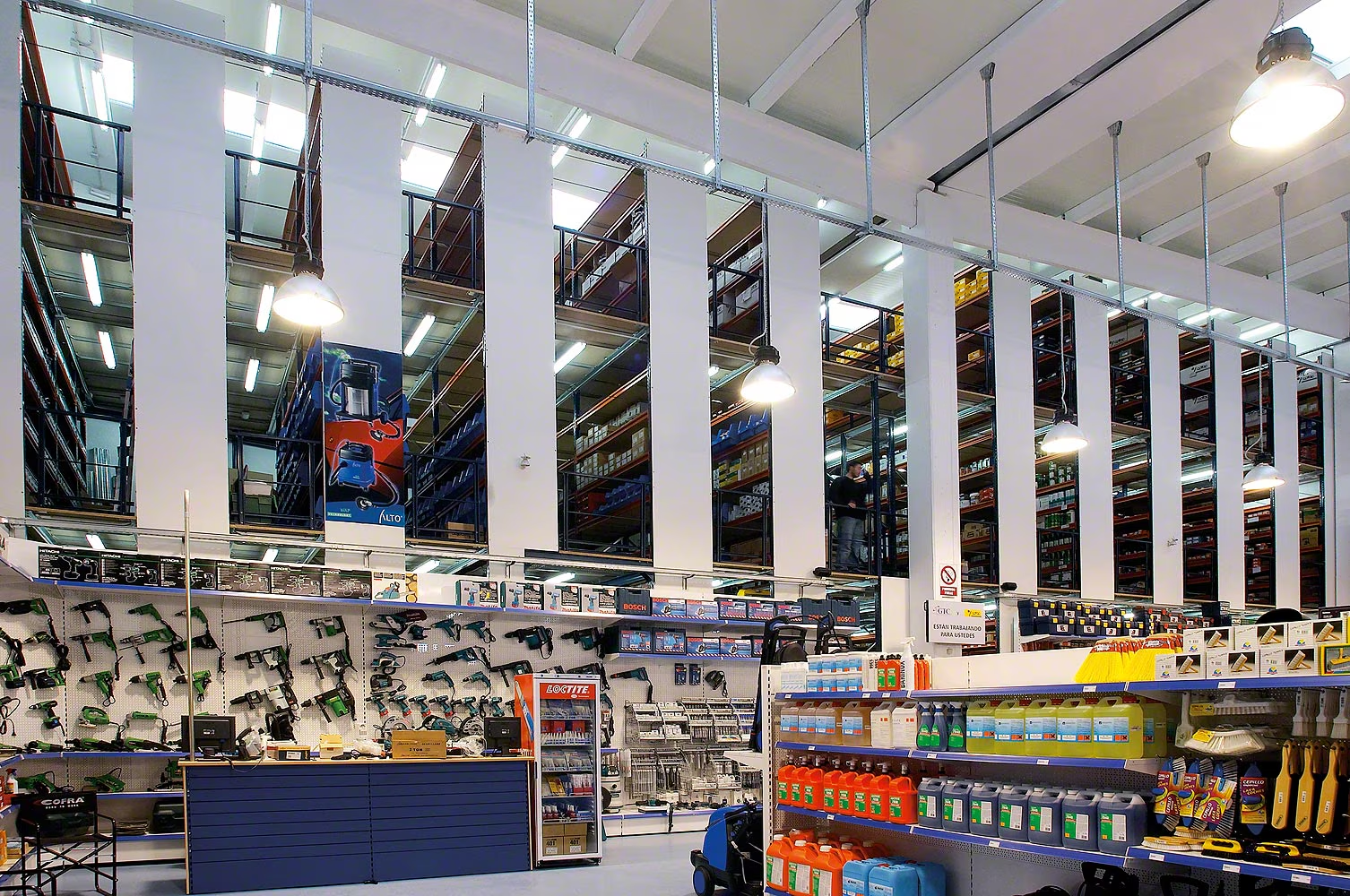
A pick module is a multi-level warehouse order fulfillment system that integrates pallet racking, carton flow lanes, conveyor systems, and mezzanine platforms into a single structure. Pick modules are designed for high-volume distribution centers that need to maximize picks per hour within a compact footprint.
The Right Application
When Your Pick Operation Has Outgrown the Floor
High SKU Count, High Daily Order Volume
When flat-floor pick operations require too much travel time to hit order cycle targets, a pick module concentrates , reducing travel per pick and increasing the number of positions accessible from a single point.
Integrated Reserve and Pick
Pick modules combine reserve pallet storage (selective rack at upper levels) with active pick faces (flow rack, shelving, or conveyor-integrated zones at lower levels) . Replenishment drops from reserve to pick without transport time across the warehouse.
High-Volume B2C or B2B Fulfillment
E-commerce and direct-ship operations with high daily order counts and wide SKU variety benefit most from multi-level pick module structure, more pick positions in a smaller footprint with integrated order conveyance.

Technical Specifications
Key Specs & Configuration
| Pick Levels | Typically 2–4 pick levels depending on ceiling height and throughput targets |
| Components | Selective racking, carton flow, powered conveyor, catwalks, safety gates, stairs |
| WMS Integration | Pick-to-light, pick-to-voice, WMS connectivity, specified to your fulfillment technology |
| Best For | E-commerce, retail distribution, pharmaceutical fulfillment, high-order-volume DCs |
| Throughput | Designed for specific order volume and pick rate targets, not a one-size system |
| Cost Drivers | Scale, level count, conveyor complexity, and the code-compliance work that multi-level structures require |
| Timeline | 3–6 months from design through installation, phased installation available |
| Code Notes | Multi-level structures require complex fire code review: egress, sprinkler, structural calcs, occupancy; in-rack sprinklers typically required |
How It Works
The Most Engineering-Intensive System We Design
Pick modules are not catalog products. They're engineered systems designed around your specific order profiles, pick rates, SKU count, and growth projections. We design the level configuration, conveyor integration, replenishment lanes, and pick face ergonomics around what your operation actually requires, and we navigate the complex permitting that multi-level structures trigger.
Multi-level structures require fire code review for egress compliance, structural engineering for each level, in-rack sprinkler coordination, and multiple means of egress per occupied level. We coordinate all of this : fire code, egress, structural calcs, and conveyor integration handled by one team, not handed off between vendors.
The result is a structure that fits your building, supports your pick methodology, and integrates with your WMS, with complete documentation and permit records. Most pick modules use carton flow lanes as the active pick face on one or more levels.

What You Get
Built In, Not Bolted On
Integrated Multi-Level Structure
Mezzanine levels, selective reserve, and flow pick faces in a single , designed around your ceiling height and column grid.
Conveyor Integration
Gravity chutes, powered conveyors, and pick-to-belt configurations designed for your order fulfillment methodology.
Full Engineering Package
Structural engineering, stamped drawings, conveyor load specifications, and permit records. A fully documented system from day one.

Best Suited For
Common Applications and Industries

Warehouse Distribution
High-throughput DC operations that have outgrown flat-floor pick efficiency.
Retail Distribution
Store replenishment operations with high daily case pick counts across wide SKU ranges.

Third-Party Logistics
High-volume fulfillment clients that require dedicated multi-level pick infrastructure.

Medical & Pharma
Lot-controlled, high-accuracy order fulfillment in regulated environments.
Related Services
We Handle Design, Installation & Permitting

The Hammerhead team is very responsive and always works to find a solution. Whether a large buildout or small modification they approach each job with professionalism. They are a valued partner to our organization.
Samuel Adam House
Google Review
Other Systems to Consider
Related Storage Systems

Carton Flow Racks
FIFO gravity flow pick faces that form the active pick level of multi-level modules.
Learn More →
Mezzanines
Structural steel platforms that form the elevated levels of pick module structures.
Learn More →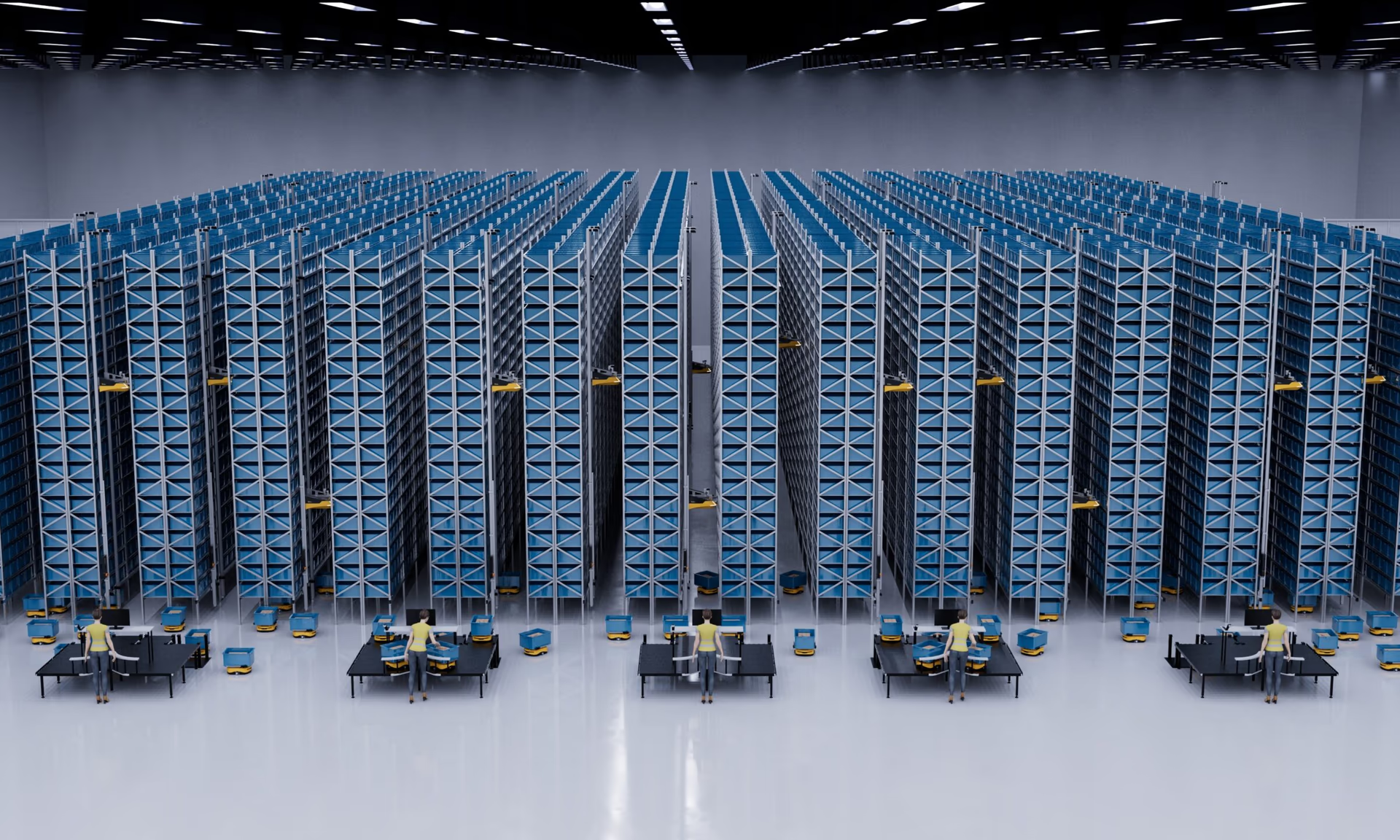
Goods-to-Person Tote Systems
Automated tote and carton picking for the slow-moving SKUs a manual pick module cannot cover efficiently.
Learn More →FAQ
Common Questions
What does a pick module cost?
Pick modules are among the larger capital projects in warehouse storage, and the number moves with the count of levels, square footage, conveyor system complexity, and permitting requirements. The code-compliance work for multi-level structures is a significant driver that is frequently underestimated. We provide detailed scope and budget estimates after reviewing your order profile and facility.
How long does a pick module project take from design to operation?
Typically 3–6 months from design kickoff through installation completion, longer for complex conveyor integration or jurisdictions with extended permitting timelines. Phased installation is possible for operations that need to maintain throughput during construction. We build realistic timelines from the start, not after the project is underway.
Can a pick module be installed in phases?
Yes, pick modules can be designed for phased installation, adding levels or conveyor segments as throughput grows. Phased design requires planning for future expansion from the beginning, including structural engineering that supports additional levels and conveyor paths. We design for phased expansion when it's part of your growth plan.
Get a Quote
Get a Quote on Pick Modules
Tell us your building and storage goals. We come back within one business day with a layout concept and a budget number, design, permits, and installation included.
- Free site assessment and layout
- Permits and PE-stamped drawings included
- Vetted, insured installation crews
Request a Free Quote
One business day response. No obligation.
Building or Expanding a Fulfillment Operation?
Let us design a pick module that hits your throughput targets and passes inspection. Free initial consultation, no obligation.
Schedule a Free Consultation