Multi-Site Rack Inspection Program

One Inspection Standard Across Every Site You Operate

Inspecting twenty warehouses is not inspecting one warehouse twenty times. Different inspectors, different report formats and different severity language leave you with a stack of local documents and no way to tell which building needs attention first. A program fixes the comparison problem, not just the inspection.

A multi-site rack inspection program is a single inspection specification applied across every facility in a warehouse network, using one severity classification and one report format so findings from different buildings can be compared, ranked and funded together. It differs from individual facility inspections in that the deliverable is a portfolio view of risk, not a set of unrelated site reports.

The Problem With Site-by-Site Inspections

The Inspections Are Not the Hard Part

Most multi-facility operators are already inspecting. Sites arrange their own inspections, often through whoever installed the racking or whoever is cheapest locally, and each one produces a report that looks nothing like the one from the site next door. One inspector flags a bent upright as critical, another calls the same damage acceptable. One report ranks findings, another is a spreadsheet of photos.

The result is that nobody can answer the question the business actually asks: across the whole network, where is the risk and what does it cost to close. Individually the reports are fine. Together they are not comparable, so capital planning falls back on whoever escalates loudest.

A program replaces that with one specification. The same inspection scope, the same severity scale, the same report format, and one point of contact who can tell you how site fourteen compares to site three. The inspection work at each building is not exotic. Making twenty buildings legible as one portfolio is the part that has to be designed.

Program Scope

What a Network-Wide Inspection Program Covers

One Written Specification

Inspection scope, tolerances and severity definitions are written down and applied everywhere, so a finding means the same thing in every building regardless of who walked the aisle. The specification is reviewed as the program runs, but it changes deliberately and for the whole network at once, rather than drifting building by building.

Risk-Tiered Cadence

Not every site needs the same interval. High-throughput buildings, heavy lift traffic and facilities with a damage history get inspected more often than low-turn storage, on a schedule set at the portfolio level.

Comparable Reporting

Every facility receives its own report in the same format, so the site team can act locally while the portfolio owner can stack results side by side without re-reading each one.

Portfolio Risk View

Findings roll up into one ranked view of the network: which facilities carry the most exposure, what is open, and what has been closed since the last cycle.

Remediation Scoped, Not Just Reported

Repairs identified during inspection come back scoped and quoted, by the people who found them, so a finding does not sit in a PDF while someone at the site works out what it would take to fix. The repair work itself is contracted separately.

Support for Your Internal Checks

Between professional cycles, site personnel are the early warning system. We provide the checklist they work from, built on the same severity definitions as the formal reports, so what a site flags between visits lines up with what the inspector records during one.

Deliverables

What Lands on Your Desk

Per-Facility Report

A photo-documented report for each building, delivered in a consistent format, with findings classified and prioritized for the site team.

Severity Classification

Findings graded on the RMI severity scale used across our inspection work, applied identically at every facility so the grades are comparable.

Network Risk Ranking

Facilities ranked by open exposure, so the next dollar of remediation budget goes where it removes the most risk.

Remediation Scope

Recommended repairs itemized per site, which is what a capital request needs and what a raw inspection report usually does not provide.

How It Runs

From Network Scoping to a Standing Cycle

The first cycle establishes the baseline and the standard. Every cycle after that measures against it, which is where the value compounds.

01

Scope the Network

Agree which facilities are in scope, what is installed at each, and what the inspection specification and severity definitions will be. This is the step that makes everything downstream comparable, and getting it right up front is what stops each site drifting into its own standard.

02

Run the Baseline Cycle

Inspect each facility against the agreed specification, on a schedule built around your operating calendar. Each site receives its own report; the portfolio receives its first genuine picture of network condition.

03

Remediate and Re-Inspect

Close findings by priority, then measure the next cycle against the baseline. Sites move up and down the ranking, and the trend becomes the argument for the following year's budget.

Track Record

Work Delivered for Multi-Facility Operators

Published case studies from clients who operate networks of buildings rather than a single warehouse. The inspection program serves the same operators, at the same scale.

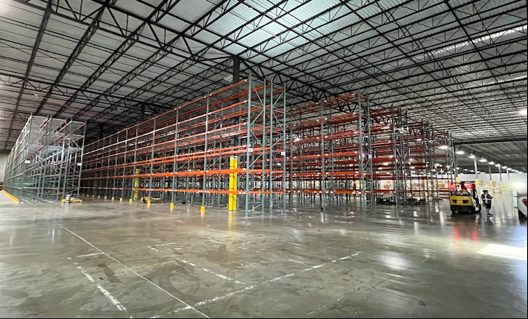
Six-level selective pallet racking in a 500,000 sq ft 3PL warehouse in Bath, PA Third-Party Logistics (3PL)

Bath, PA  ·  500,000 sq ft · 8,260 pallet positions  ·  6-8 weeks · Smart Warehousing

High-Density Pallet Rack Installation for National 3PL

High-density selective pallet rack installation for a national 3PL's 500,000 sq ft retail distribution facility in Bath, PA. Hammerhead designed, permitted, and installed 8,260 pallet positions at six levels high in a 36-foot clear building, on an expedited schedule driven by a major customer ramping up inbound volume.

Selective Pallet Rack
View Project
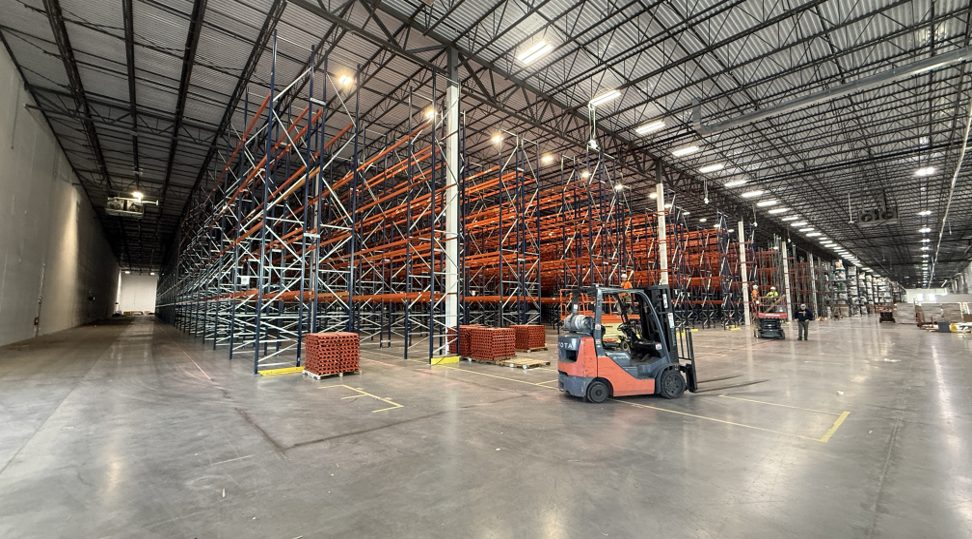
Relocated selective pallet racking at four and five levels in a South Brunswick, NJ storage warehouse with forklift in the aisle Archive & Records Storage

South Brunswick, NJ  ·  436,000 sq ft · 19,807 pallet positions  ·  5 weeks · Clutter / Iron Mountain

Pallet Rack Relocation for Storage Company

Full teardown-to-reinstall rack relocation for a national moving and storage company. When the client vacated a facility in Wind Gap, PA, Hammerhead repurposed the existing racking for reinstallation at a 436,000 sq ft building in South Brunswick, NJ, delivering 19,807 pallet positions at four and five levels high in a 36-foot clear warehouse.

Selective Pallet Rack
View Project
Coverage
Hammerhead has delivered projects in all 50 states, so a program does not stall because a facility sits outside a regional footprint.
One Point of Contact
A program runs under a single project manager across every facility in scope, rather than a separate relationship per site.

Program Guide

The Full Inspection Program Guide

Service tiers, the complete inspection checklists, executive reporting deliverables, and the step-by-step process from scoping your network to planning remediation.

Download the Program Guide

Common Questions

Multi-Site Rack Inspection Questions, Answered

How do you stop two inspectors from grading the same damage differently?

By writing the severity definitions down before the first inspection and applying them as a fixed specification rather than as judgment. Inspectors work to the same documented thresholds, and reports are reviewed against the specification before release. Consistency between inspectors is the thing a program buys that individual site inspections cannot.

Who owns the standard, you or us?

You do. We draft it and we apply it, but it is your specification and it should survive a change of vendor. A standard that only one contractor can interpret is not a standard, and it leaves you worse off than before.

Should every facility be on the same inspection interval?

Usually not. Interval should follow risk: lift traffic, throughput, rack age, seismic exposure and damage history. A high-turn cross-dock and a low-turn overflow building do not need the same cadence, and forcing one interval across the network either overspends on quiet sites or underinspects the busy ones.

We already run internal inspections. Does a program replace them?

No, it standardizes them. Site personnel see damage first and should keep checking. What a program adds is a shared checklist and shared severity language, so an internal observation at one site means the same thing as the same observation at another, and so it feeds the same record.

How do findings from twenty sites turn into one capital plan?

Because they are graded on one scale, findings can be ranked across the whole network rather than only within each building. That produces a single ordered list of what to fix and where, which is what a capital request needs. Site-by-site reports in different formats cannot be ranked against each other without someone re-reading all of them.

Can a program cover racking you did not install?

Yes, and most do. Inspection work turns on component condition and configuration rather than on who originally supplied the system. Mixed networks with several original suppliers are the normal case.

Start With One Comparable Picture

Send us the facility list and what you are inspecting for today. We will come back with a specification, a cadence, and a phasing approach for the first cycle.