
Double Deep Pallet Racking
Double Deep Pallet Racking: More Positions From the Same Footprint
Two pallets front to back on standard selective frames and beams. The smallest step up in density from selective racking, and the one that changes the least about how your operation already runs.
2 Pallets Deep
Stored front to back per aisle face
9 to 12 ft
Typical double-deep reach truck aisle
8,014 Positions
Delivered on our Houston 3PL project
Double deep pallet racking is a configuration of selective pallet rack that stores two pallets front to back at each aisle face, built on back-to-back double-deep rows. A deep-reach truck with a pantograph, meaning an extending mechanism, reaches the pallet in the rear position. The trade-off is access: the front pallet has to be moved before the pallet behind it can be reached, which is why each two-deep position works best holding one product.
The Right Application
Where a Double Deep Racking System Earns Its Keep
Few SKUs, Many Pallets of Each
The rule of thumb is straightforward. If you rarely hold more than 8 to 10 pallets of one SKU at a time, selective almost always wins. Once a single product routinely fills a full lane, density starts to pay, and double deep is the first place that math turns over.
Bulk Reserve Behind a Selective Pick Face
Plenty of warehouses run both. Selective bays stay in the pick zones where operators need every position, and a double deep block carries the bulk reserve behind them. Fast movers stay single-deep, multi-pallet SKUs go double deep.
Consolidating Into a Smaller Footprint
Fewer aisles serving the same number of rows is what frees floor. Our Houston 3PL project used a condensed double deep layout to consolidate storage and let the customer downsize their leased warehouse footprint.
Buildings Where Every Square Foot Is Expensive
When the cost of the space is the constraint rather than the cost of the rack, adding positions inside the walls you already pay for is usually cheaper than adding walls. Double deep does that on standard components.
Operations That Do Not Want to Relearn the Building
Double deep is a configuration of selective rack, not a mechanical system. There are no carts, no rails, and no lanes a forklift drives into. The change on the floor is the truck and the lane discipline, and not much else.
A/B/C Slotting Across One Building
Where inventory splits cleanly into fast, medium, and slow movers, double deep gives the middle of that curve somewhere sensible to live: too much volume per SKU to justify a selective position each, not enough to fill a deep lane.

Technical Specifications
Key Specs & Configuration
| Storage Depth | Two pallets front to back per aisle face, on back-to-back double-deep rows. Double deep is a configuration of selective rack rather than a separate structure. |
| Truck Requirement | A deep-reach truck with a pantograph, meaning an extending mechanism, to place and retrieve the pallet in the rear position. Standard counterbalance forklifts cannot serve the back pallet. |
| Operating Aisle Width | 9 to 12 ft is typical for a double-deep reach truck. Verify with your forklift manufacturer before layout, because the truck sets the aisle and the aisle sets everything downstream. |
| Frame Depth | 36"–48" standard, sized to your pallet dimensions and load overhang |
| Bay Width and Upright Height | 8'–12' bay widths, 8'–40'+ upright heights, 2–6+ beam levels, specified to your pallet size and ceiling clearance. The same components used in single-deep selective rack. |
| Flue Space and Row Spacers | Minimum 6 in longitudinal flue between back-to-back rows, held open by row spacers that also tie the two rows into one structure. Transverse flue 3 in minimum. |
| Fire Code Notes | Storage over 12 ft triggers a high-pile fire code review, and high-pile permits review flue specs. Sprinklers require a minimum 18 in clearance above the top of stored product. Requirements vary by jurisdiction. |
| Seismic Rating | Engineered and PE-stamped for your local seismic zone, designed in from the start rather than added after installation |
| What We Need to Quote | Pallet dimensions and the heaviest actual load per position, how many pallets you typically hold of your top SKUs, ceiling height and column spacing, and the make and model of the truck that will serve the aisle. |
How It Works
How We Design a Double Deep Racking System
Double deep is not a different structure. It is a configuration of selective pallet racking, built on the same upright frames and beams, with rows arranged back to back so each aisle face holds two pallets instead of one. Other rack types reuse the same frame and beam standards but rearrange the geometry to trade access for density, and double deep is the smallest version of that trade. So we start from the SKU profile, not the building. If you rarely hold more than 8 to 10 pallets of one SKU at a time, selective almost always wins. Once a single product routinely fills a full lane, density starts to pay.
The next question is the truck. Selective gives 100% selectivity because every position faces an aisle. A double deep position does not, so it needs a deep reach truck with a pantograph, an extending mechanism that reaches past the front pallet to the one behind it. Deep reach racking aisles run roughly 9 to 12 ft depending on the truck, and that number is worth confirming with your forklift manufacturer before anything gets drawn. The truck sets the aisle and the aisle sets everything downstream: how many rows fit, how the block is oriented, and how many positions the layout finishes with. Our guide on pallet rack spacing requirements and our page on narrow-aisle layouts cover how equipment choice drives a layout.
Then lane discipline and code. Dense storage only works when a whole lane holds one product, because mixing SKUs in a deep position forces an operator to relocate the front pallet to reach something behind it. Back-to-back rows need a minimum 6 inch longitudinal flue, held open by row spacers that also tie the rows together, with a 3 inch minimum transverse flue. Storage over 12 ft triggers a high-pile fire code review, sprinklers need a minimum 18 inch clearance above the top of stored product, and permits vary by jurisdiction. Every system is engineered and PE-stamped for the local seismic zone, and we handle permitting and inspections. Our pallet rack dimensions and sizes guide covers how frame depth, bay width, and beam levels are derived.
We assess the facility before we quote, on-site or from floor plans and photos depending on project scope, and every installation includes stamped drawings, load specifications, and permit records. A dense block also takes more forklift contact than a standard selective aisle, so column protectors and end-of-aisle protection are specified as standard rather than added later. Our Channelview, TX project for a Houston 3PL is the worked example: the brief was to nearly double storage in the same aisles, and the finished fully welded double deep system came to 8,014 pallet positions and more than 600,000 pounds of steel, with end guards, column protectors, and over 8,000 location labels, delivered and installed in under two weeks. Our own crews handle the racking installation, and pallet rack inspections keep the block in spec once product is in it. If two deep is not enough depth, push back racking is the next step.

What You Get
Built In, Not Bolted On
Designed From Your SKU Profile
The design comes off how many pallets you actually hold of each product, not off the maximum number of positions the footprint could theoretically carry. A deep position holding two different SKUs is a position that creates work.
Engineered, Stamped, and Permitted
Systems are engineered and PE-stamped for the local seismic zone, with flue spacing, row spacers, and sprinkler clearance designed in. We handle permitting and inspections, including high-pile review where storage height triggers it.
Protected at the Aisle
Dense systems take more forklift contact than selective. Column guards and end-of-aisle protection are specified as standard, the same way they were on our Houston install.

Best Suited For
Common Applications and Industries

Third-Party Logistics
Bulk reserve for client SKUs that arrive by the truckload, kept behind selective pick faces that stay single-deep.

Warehouse Distribution
More positions inside the same walls when the building is full and the lease is the constraint, without changing the rack standard.

Food & Beverage
High-volume products that fill both positions of a deep pair, where lot rotation can be managed by lane rather than by pallet.

Manufacturing
Raw materials and packaging held many pallets deep per item, staged in bulk and pulled to the line.
Related Services
We Handle Design, Installation & Permitting
Double deep only pays if the lanes stay clean. The design has to come off the real SKU profile, meaning which products actually fill both positions, rather than off the most pallets the footprint could theoretically hold. Get that part right and the only real change on the floor is the truck and the lane discipline.
Ivan Garcia
Director of Project Management
Other Systems to Consider
Related Storage Systems
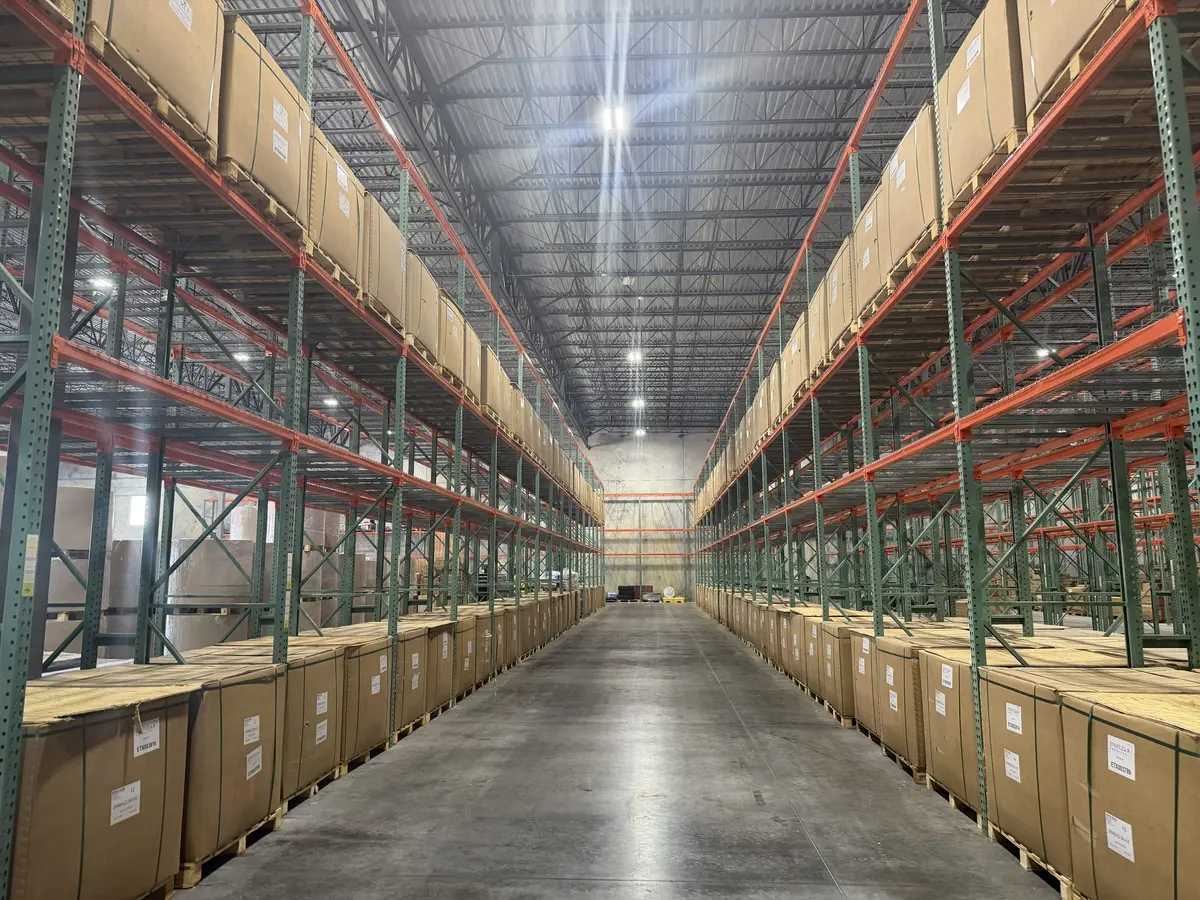
Selective Pallet Rack
The base system, and the same frames and beams. Every position faces an aisle, which is what gives selective 100% selectivity.
Learn More →
Push Back Racking
The next step in depth, 2 to 6 pallets per lane on gravity carts, loaded and retrieved from the aisle face so forklifts never enter the rack.
Learn More →
Drive-In Racks
Deeper still, 3 to 10 or more pallets per lane, with the forklift driving into the structure to place and retrieve.
Learn More →FAQ
Common Questions
What is double deep pallet racking?
Double deep pallet racking stores two pallets front to back at each aisle face, on back-to-back double-deep rows. It is a configuration of selective pallet racking rather than a separate system, built on the same upright frames and beams. Other rack types reuse those same frame and beam standards but rearrange the geometry to trade access for density, and double deep is the smallest version of that trade. The rear pallet is reached with a deep reach truck, and the front pallet has to be moved before the one behind it can be pulled.
What forklift do you need for double deep racking?
A deep-reach truck. It carries a pantograph, an extending mechanism that reaches past the front position to place and retrieve the pallet behind it, which a standard counterbalance forklift cannot do. Double-deep reach trucks typically operate in aisles of 9 to 12 ft, and that range should be verified with your forklift manufacturer for the specific model you run. The truck sets the aisle and the aisle sets everything downstream, so it is the first thing we ask about. Our pallet rack spacing requirements guide covers aisle widths by equipment type.
Is double deep racking FIFO or LIFO?
Think about the mechanics rather than the label. Within each two-deep pair, the rear pallet sits behind the front one and can only come out after the front pallet moves, so in practice these positions usually run last in, first out. That is workable when both pallets in a pair hold the same product and the same lot. It stops being workable when strict rotation applies at the pallet level, which is where selective racking or a gravity flow system is the better answer.
How much more storage does double deep racking add?
It depends entirely on your building, your pallet dimensions, and the aisle your truck needs, so there is no single number worth quoting. The mechanism is that fewer aisles serve the same number of rows, which converts aisle floor into pallet positions. As a real example, the brief on our Channelview, TX project for a Houston 3PL was to nearly double storage in the same aisles, and the delivered system came to 8,014 pallet positions using more than 600,000 pounds of steel. The customer consolidated storage and downsized their leased footprint. We size the actual gain against your floor plan before quoting.
When is double deep racking the wrong choice?
When you rarely hold more than 8 to 10 pallets of one SKU at a time, since at that volume selective almost always wins. When rotation discipline is strict at the pallet level, because the rear pallet is trapped behind the front one. And in high-variety pick zones, where mixing SKUs in a deep position forces operators to relocate pallets all day to reach what they need. Plenty of warehouses run both systems for exactly this reason, keeping selective in the pick zones and putting the bulk reserve in a dense block. If your SKU count is high across the board, that is worth saying out loud before anyone draws a double deep layout.
What does double deep pallet racking cost?
There is no useful per-position number, because the drivers move independently. Component counts differ from a selective layout of the same pallet count, upright height and load rating change the steel, seismic requirements change the engineering, and high-pile permits and sprinkler work vary by jurisdiction. The deep-reach truck is its own line item and often the one that gets missed. Our pallet racking cost guide walks through how a racking quote is actually built, and we price against your building conditions rather than an estimate that ignores them. Send us the details through contact and we will scope it.
Get a Quote
Get a Quote on Double Deep Pallet Racking
Tell us your building and storage goals. We come back within one business day with a layout concept and a budget number, design, permits, and installation included.
- Free site assessment and layout
- Permits and PE-stamped drawings included
- Vetted, insured installation crews
Request a Free Quote
One business day response. No obligation.
Thinking About Going Two Pallets Deep?
Send us your pallet counts by SKU, your ceiling height, and the truck you run, and we will tell you whether double deep is the right move. Free consultation, no obligation.
Schedule a Free Consultation