Goods-to-Person Tote Systems
Goods-to-Person Picking: Bring the Totes to the Picker
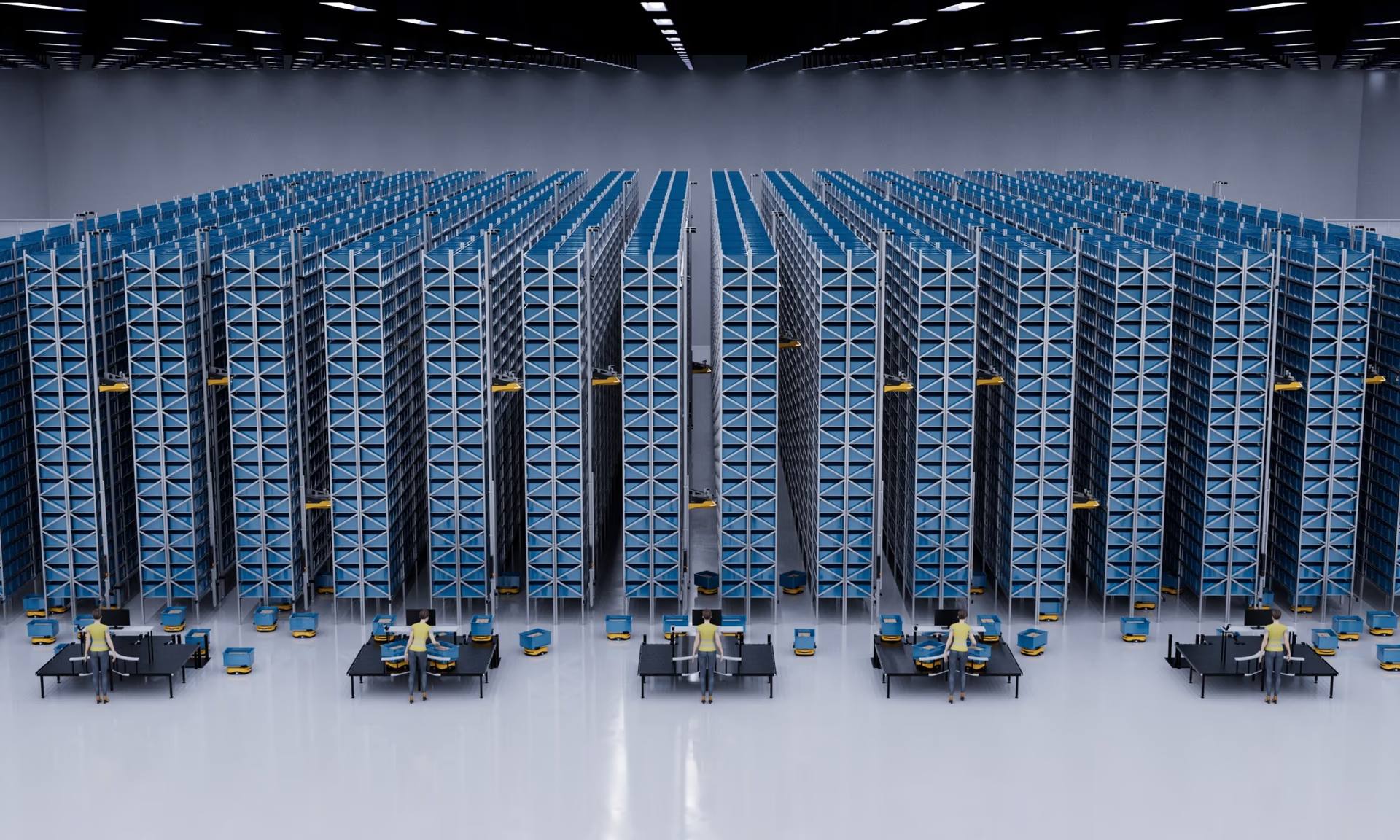
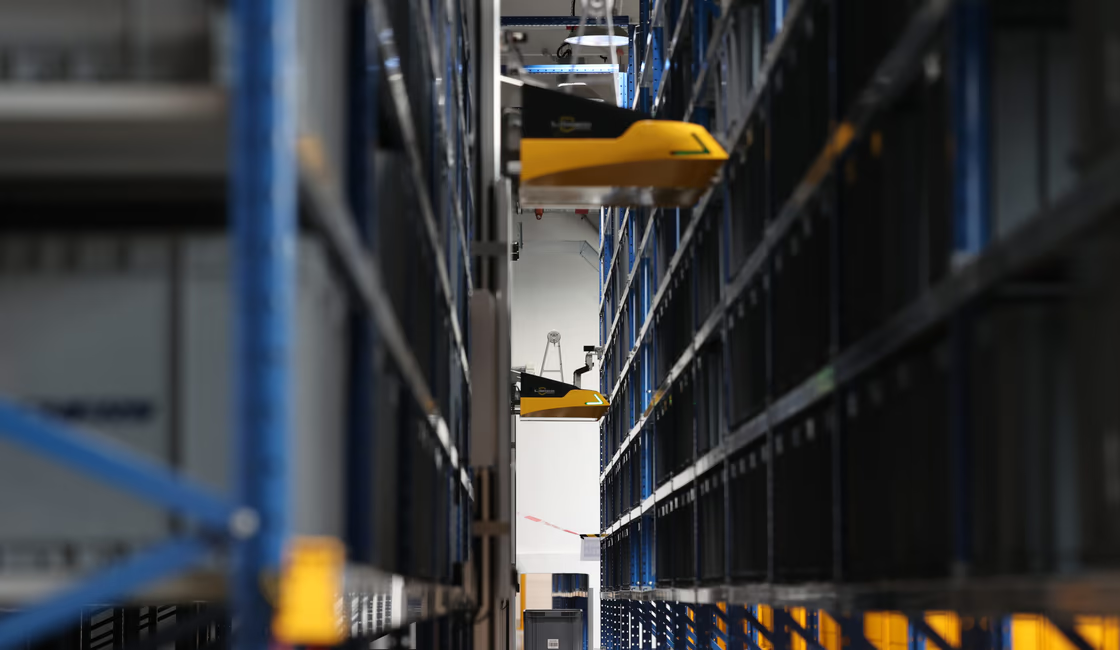
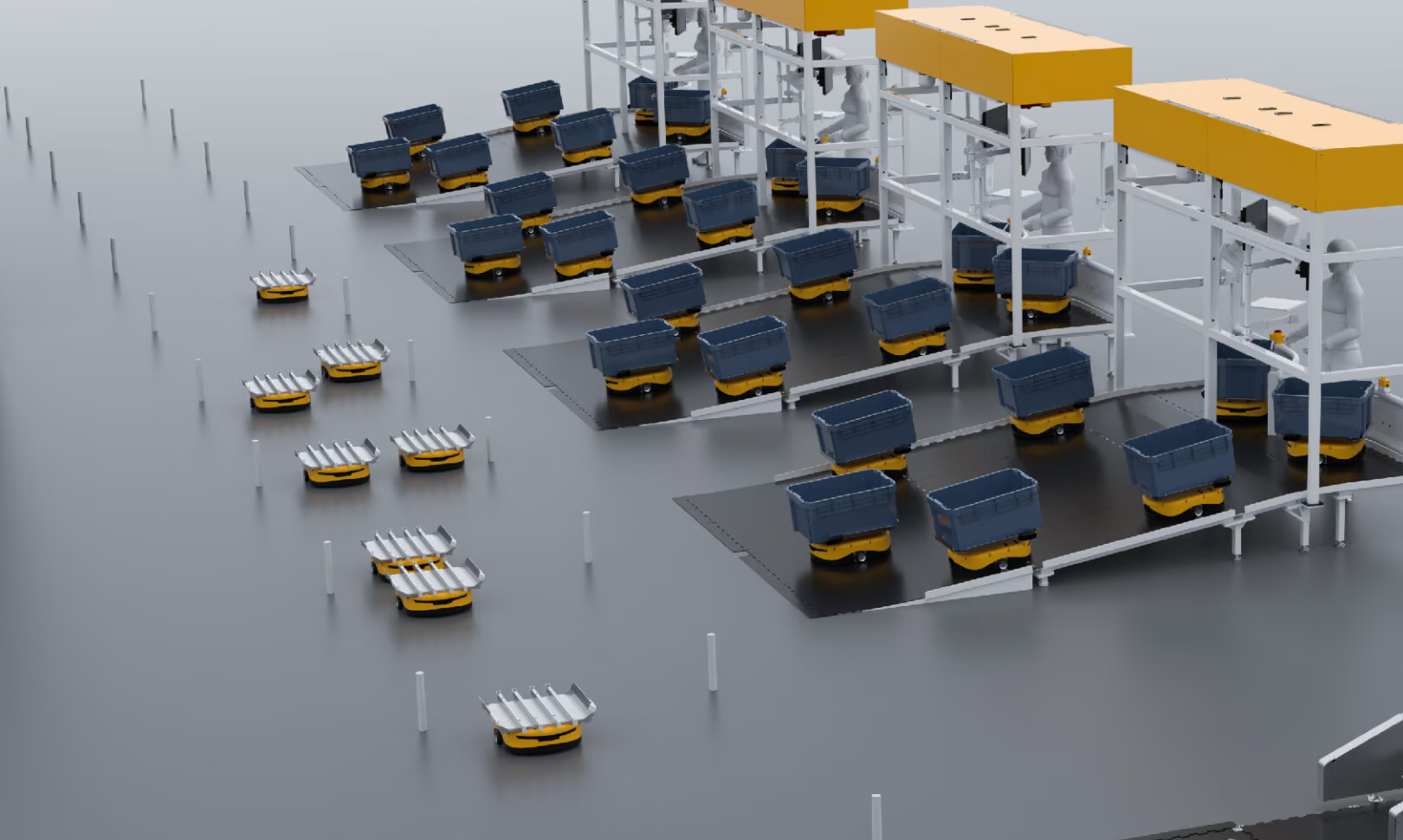
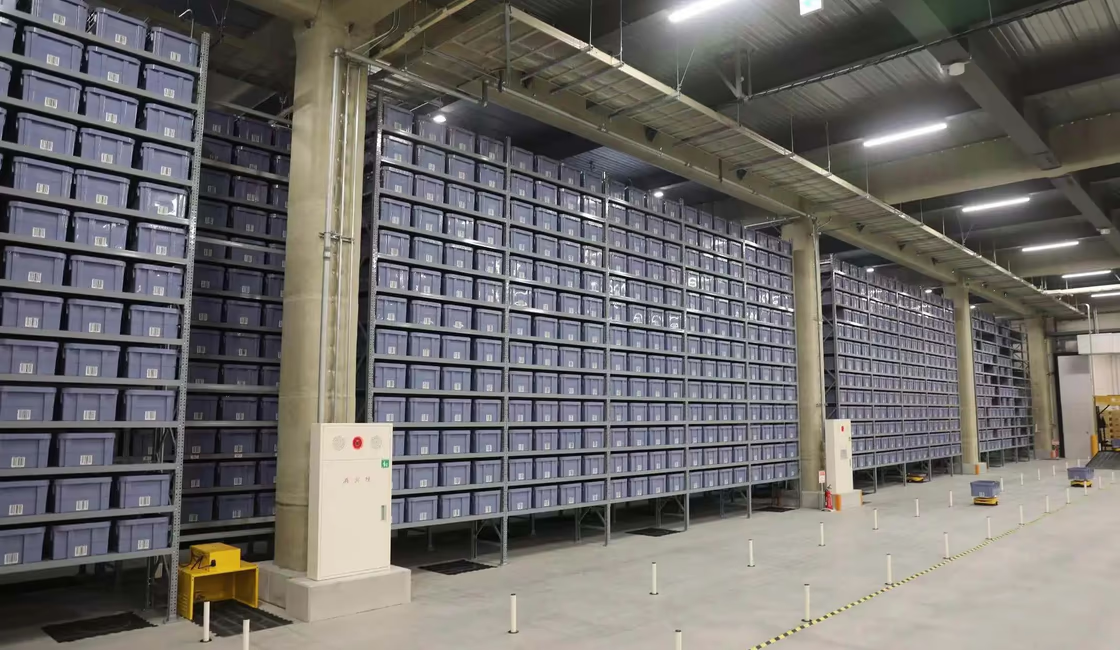
Automated tote and carton picking that mounts to conventional racking instead of demanding a purpose-built structure. Climbing robots pull containers from storage and floor robots deliver them to the workstation. We design, engineer, and install the complete system, from the rack to the robots and controls.
Totes & Cartons
Both handled without decanting
Rack-Mounted
Retrofits conventional racking
24/7
Continuous automated picking
A goods-to-person (GTP) system is an automated order-picking solution that brings totes, bins, or cartons to a stationary operator instead of sending a picker to walk the aisles to the inventory. Robots retrieve the requested unit from storage and deliver it to a workstation, so the operator picks continuously from presented containers rather than spending most of the shift traveling.
The Right Application
When Picker Travel Is the Bottleneck
High-SKU Piece Picking
In a manual small-parts operation, most of a picker's shift is walking, not picking. The more SKUs you carry and the more they spread across the building, the worse that ratio gets. Goods-to-person inverts it. The operator stays at a station and the containers come to them, so throughput per person stops being a function of how far apart your SKUs sit.
Labor-Constrained and Multi-Shift Operations
When you cannot reliably staff second and third shift, or peak season forces you to onboard temporary pickers who need weeks to learn the building, automation changes the math. Robots run continuously, and a goods-to-person station takes far less training than aisle picking because the system decides what comes next.
Retrofits Into the Building You Already Have
This is where rack-mounted goods-to-person separates from grid-based bin storage. Grid systems need a purpose-built steel structure and every incoming item decanted into system bins before it can be stored. A rack-mounted system fits to the face of conventional racking and handles original cartons alongside totes, so you keep your building, your rack, and your existing receiving process.
Technical Specifications
Key Specs & Configuration
| System Type | Rack-mounted climbing robots paired with floor robots that transport containers to picking stations |
| Load Handled | Totes, bins, and original shipping cartons, with no decanting step required |
| Unit Weight | Container loads typically up to roughly 65 lb per unit |
| Throughput | Several hundred container presentations per hour per workstation; system throughput scales with robot and station count |
| Storage Height | Typically to 25 ft on conventional racking; taller configurations depend on rack design and building clear height |
| Aisle Width | Very narrow aisles, since no forklift or operator enters the aisle |
| Retrofit vs. New Build | Fits existing conventional racking or a new rack structure; no purpose-built grid required |
| Inventory Flow | Random-access by container, configurable to your order profile |
| WMS Integration | Warehouse management, control, and execution system connectivity for order release, sequencing, and cycle counting |
| Best For | High-SKU piece picking, e-commerce and retail fulfillment, labor-constrained operations, and buildings that cannot be rebuilt around a grid |
| Typical Timeline | Shorter than crane or grid AS/RS, since the structure is conventional rack; robot installation itself measures in weeks, not months |
| Cost Drivers | Robot and workstation count sized to peak throughput, storage position count, software and WMS integration scope, and whether the racking is new or existing |
| Typical ROI | Driven mainly by labor reduction and reclaimed floor space; paybacks are generally faster than pallet AS/RS because the structure and install scope are lighter |
| Code Notes | Standard racking permits in most jurisdictions, plus electrical and controls coordination; in-rack fire protection depends on commodity class and storage height and needs early fire marshal review |
| Delivered Via | Hammerhead as integrator and general contractor, from rack design through commissioning |
How It Works
Integrator and General Contractor: One Team for the Whole System
A goods-to-person system is not just the robots. It is the racking they mount to, the workstations, the controls and software, the electrical, the fire protection, and the permitting, all working as one system. When those pieces come from separate vendors who do not talk to each other, the gaps show up as schedule slips and change orders.
We serve as integrator and general contractor. We handle the automation equipment, the rack structure, permitting, fire protection coordination, and installation as one project, with a single point of responsibility from concept through commissioning and ongoing support.
We also specify the system that actually fits. Goods-to-person earns its cost when SKU count is high and picker travel is the constraint. If your volume is lower or your order profile is concentrated in a handful of fast movers, carton flow, a pick module, or a better conventional layout is often the stronger return, and we will tell you that before you spend the capital.
What You Get
Built In, Not Bolted On
Mounts to Conventional Racking
Climbing robots run on a lightweight frame fixed to the rack face, so the storage structure stays conventional rack rather than a purpose-built automation grid.
Cartons and Totes, No Decanting
Original shipping cartons are handled alongside totes and bins, which removes the decanting labor that grid-based bin systems require on every inbound receipt.
WMS and Controls Integration
The system connects to your warehouse management, control, and execution software for order release, pick sequencing, and automated cycle counting, with every move recorded.
Scales by Adding Robots
Throughput grows by adding robots and workstations rather than replacing the system, so you can size to today's volume and expand as it grows.
Best Suited For
Common Applications and Industries

E-Commerce Fulfillment
High-SKU, piece-picked operations where travel time, not pick time, is what caps orders per hour.

Third-Party Logistics
Multi-client small-parts fulfillment with demanding accuracy and SLA requirements across a changing SKU base.
Retail Distribution
Store replenishment and direct-to-consumer picking from the same building, with sharp seasonal peaks.

Medical & Pharma
High-value, high-SKU inventory where controlled access and audit-traceable pick records matter as much as speed.
Related Services
We Handle Design, Installation & Permitting
Other Systems to Consider
Related Storage Systems

Automated Storage & Retrieval (AS/RS)
The full AS/RS family, from unit-load cranes to mini-load, VLMs, and carousels, for pallet and case handling beyond piece picking.
Learn More →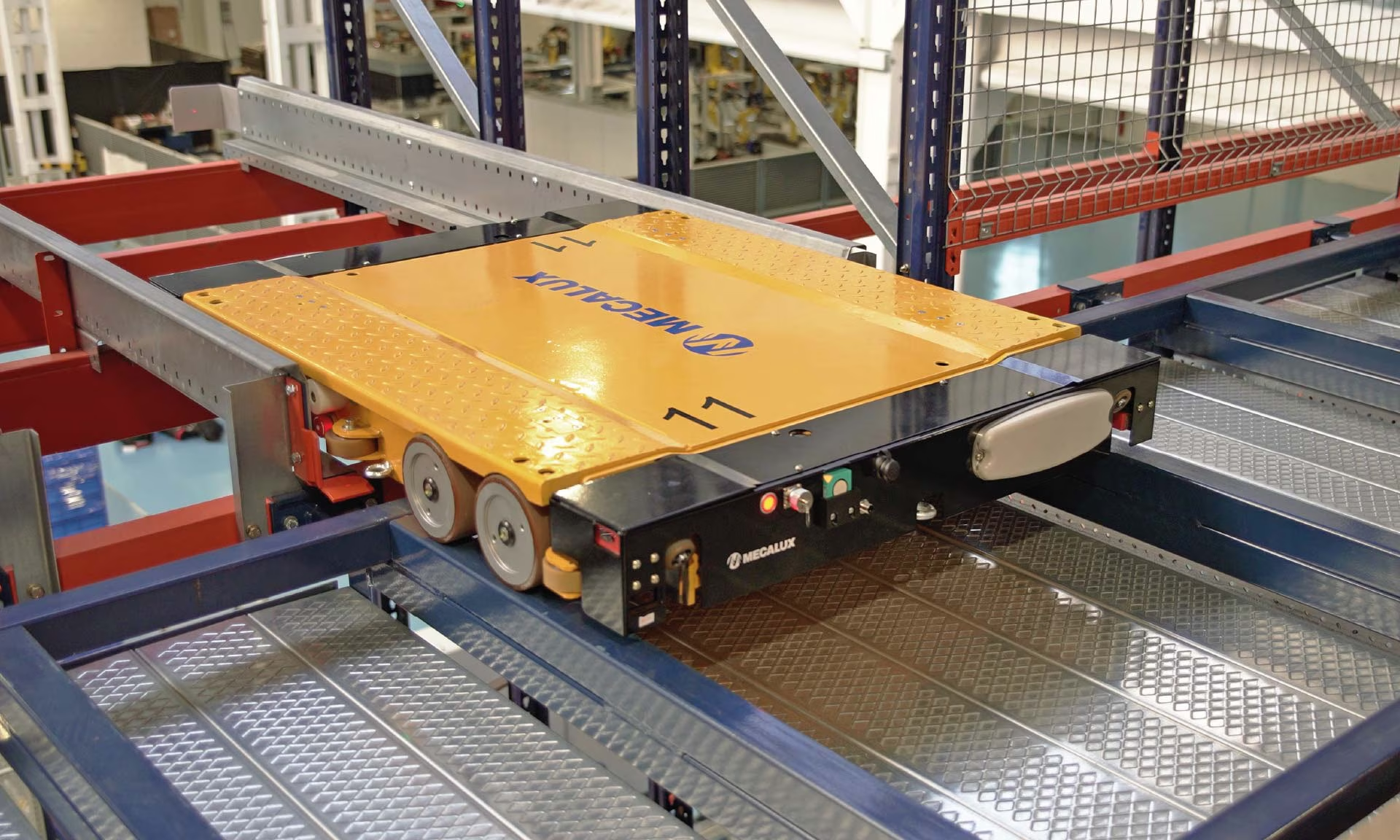
4-Way Shuttle Systems
Automated multi-directional grid storage at the pallet level, for operations where the unit moved is a pallet rather than a tote.
Learn More →
Carton Flow Racks
Gravity-fed manual pick faces for case and carton picking. Lower capital cost when automation is not yet justified.
Learn More →FAQ
Common Questions
What is a goods-to-person picking system?
A goods-to-person system brings inventory to a stationary operator instead of sending the operator to the inventory. Robots retrieve the requested tote, bin, or carton from storage and present it at a workstation, and the operator picks from a sequence of presented containers. It is the opposite of conventional person-to-goods picking, where the picker walks the aisles with a cart or a pick list. Because travel is usually the largest single component of manual pick time, removing it is where most of the throughput gain comes from. Goods-to-person is one branch of the broader automated storage family covered in our guide to types of automated storage and retrieval systems. If you are past the what-is-it stage, our guide to sizing a goods-to-person picking system covers how order lines translate into stations and robots.
How is this different from grid or cube bin storage?
Grid and cube systems store bins in a dense stack under a purpose-built steel structure, with robots working across the top and digging down to reach a bin. They deliver very high density for small items, but they require that structure to be built and they require every inbound item to be decanted into system bins before storage. A rack-mounted goods-to-person system instead fits climbing robots to the face of conventional racking and uses floor robots to move containers to the station. It handles original shipping cartons as well as totes, so there is no decanting step, and it can go into a building you already have. Grid systems generally win on raw density for small parts; rack-mounted systems win on retrofit, carton handling, and speed of deployment.
Can this go on the racking we already have?
Often, yes, and that is the main reason to consider a rack-mounted system. The robots mount to a frame fixed to the rack face rather than requiring a dedicated automation structure. What we verify first is upright capacity and condition, frame and beam geometry, floor flatness, aisle dimensions, and whether the existing configuration matches the container sizes you want to store. If your rack was installed for pallets and you are picking small parts, some reconfiguration is usually part of the project. We assess the existing structure before designing around it.
Does this replace carton flow racks or a pick module?
Not necessarily, and in a lot of buildings the right answer combines them. A pick module or carton flow bank is very efficient for a limited set of fast-moving SKUs where a picker can work a short, dense face without much travel. Goods-to-person earns its cost on the long tail, where thousands of slower SKUs would otherwise spread pickers across the whole building. Many operations run both, with the fast movers in a manual pick face and the tail in an automated system. We design the split rather than defaulting to one technology for everything.
What does Hammerhead handle on a goods-to-person project?
Everything from concept through commissioning: system design and equipment selection, the rack structure new or existing, workstation layout, controls and software integration, electrical coordination, fire protection review, permitting, and installation. You work with one team that owns the outcome and stays on for support afterward, instead of coordinating an automation vendor, a rack supplier, an installer, and a permit expediter separately.
How much does a goods-to-person system cost?
Cost is driven by how many robots and workstations your peak throughput requires, how many storage positions you need, the scope of software and WMS integration, and whether the racking is new or already in place. Because the structure is conventional rack rather than a purpose-built grid, both the capital and the install scope tend to be lighter than crane or grid AS/RS at comparable position counts. The honest gating question is not price, it is whether your SKU count and order volume are stable enough to justify committing to automation at all. We model the business case with you, including labor, space, and throughput, before you commit. Our warehouse capacity calculator is a useful starting point for the space side of that comparison.
Get a Quote
Get a Quote on Goods-to-Person Tote Systems
Tell us your building and storage goals. We come back within one business day with a layout concept and a budget number, design, permits, and installation included.
- Free site assessment and layout
- Permits and PE-stamped drawings included
- Vetted, insured installation crews
Request a Free Quote
One business day response. No obligation.
Is Picker Travel Capping Your Throughput?
Let us help you evaluate whether goods-to-person fits your SKU profile, order volume, and building. Free consultation, no obligation.
Schedule a Free Consultation