
Teardrop Pallet Rack
Teardrop Pallet Rack: The Connector Standard Most Warehouses Already Run
Beams that seat in a punched slot, lock with a clip, and move to a different level with a mallet. The connector style that made selective racking fast to install and cheap to reconfigure.
Boltless
Beams seat in the slot and lock with a clip
100% Selectivity
Every position faces an aisle
Seismic Rated
PE-stamped engineered drawings
Teardrop pallet rack is roll-formed selective pallet racking whose upright columns are punched with teardrop-shaped slots. Beam end connectors carry matching tabs that drop into those slots and lock without bolts, held in place by a safety clip. It is a connector style rather than a separate storage system, and it is the North American default.
The Right Application
Where Specifying Teardrop Is the Right Call
Adding to a System You Already Own
Most existing roll-formed rack in North American warehouses uses a teardrop profile, so an extension usually stays on the same standard. That does not make the parts interchangeable on its own. Frame depth, column size, beam profile, and slot spacing all still have to be measured off the steel in the building before anything is ordered.
Buildings That Get Reconfigured Often
Beam levels move without tools beyond a mallet and a new safety clip, which makes a re-pitch a shift of work rather than a project. If your product profile changes with the season or the client, the connector style is doing more for you than it looks like on a drawing.
Schedules Where Install Speed Matters
A boltless connection means beams go in without threading and torquing hardware at every level, which is a meaningful part of why roll-formed selective rack installs quickly. When a lease has started and product is on the way, that is often the deciding factor.
Standard Dry Distribution Loads
Ambient warehouses, normal aisle traffic, and pallet weights inside what a roll-formed beam pair is rated to carry. That is the majority of pallet storage in the country, and it is the case teardrop was designed around.
Projects Sourcing New and Used Together
Teardrop is the most available profile on the used market, which is why mixed-source projects tend to land on it. Compatibility still has to be verified rather than assumed, and our [used versus new racking guide](/articles/used-vs-new-pallet-racking) covers what actually goes wrong when brands get mixed in one run.
Where Teardrop Is Not the Answer
Freezers, coolers, and wash-down areas, and any aisle where forklift contact is routine rather than occasional. Those are structural rack cases, and the reasons are in the comparison below rather than buried in a footnote.

Technical Specifications
Key Specs & Configuration
| What Teardrop Means | A teardrop-shaped slot punched up both upright columns, and a beam end connector with matching tabs that drop into the slot and seat under load. No bolts at the beam-to-column connection. A safety clip pins the connector so an upward strike cannot lift a beam out of the slot. |
| System Type | A connector style, not a separate storage system. Teardrop rack is standard roll-formed selective pallet rack, so selectivity, aisle logic, and rotation all work the way they do on any selective system. |
| Upright Column Size | 3"×3" columns are the most common profile in the field. Column size, steel gauge, and frame height together set the frame capacity, so the column is specified against the loaded height rather than picked to match a beam. |
| Frame Depth | 36"–48" standard, sized to your pallet dimensions and load overhang |
| Bay Width and Upright Height | 8'–12' bay widths, 8'–40'+ upright heights, 2–6+ beam levels, specified to your pallet size and ceiling clearance. Capacity runs 1,000–30,000+ lbs per bay depending on the upright and beam configuration. |
| Beam Profile | Step beams are the North American default, with a step formed at the top edge so wire decking sits flush. Box beams take over where the pair has to carry more. Step beams handle most distribution loads up to 8,000 lb per pair. |
| Slot Spacing | Beam levels move in fixed increments set by the column punch spacing, commonly 2 inches on center. It varies by manufacturer, so measure it on the system you have before ordering beams against it. |
| Safety Clips | Fitted on both ends of every beam. They are the component most often left off during a reconfiguration, and missing clips are one of the most common findings on a rack inspection. |
| Cross-Compatibility | Treat it as something to verify, not something to assume. Connector dimensions, slot spacing, and frame depths differ enough between sources that parts which look interchangeable are not engineered together. |
| Cost Drivers | Upright height and column gauge, beam length and rated capacity, total position count, decking and safety hardware, seismic engineering in your jurisdiction, freight, and whether install happens around live operations. |
| Permits and Seismic | Engineered and PE-stamped for your local seismic zone. Permit requirements are set by storage height and commodity rather than by connector style, and high-piled storage review applies where fire code thresholds are met. Requirements vary by jurisdiction. |
| What We Need to Quote | Pallet dimensions and the heaviest actual load per level, ceiling height and column spacing, the forklift make and model, and, on an existing system, the measured frame depth, column size, beam profile, and slot spacing rather than the original order. |
How It Works
How We Specify a Teardrop Rack System
Teardrop is a connector style, not a storage system. The rack it describes is selective pallet racking: every position faces an aisle, beam levels adjust, and the system behaves the way selective rack behaves. What the teardrop profile adds is a specific way of joining a beam to an upright. The column is punched with teardrop-shaped slots up its height, the beam ends in a connector with matching tabs, and those tabs drop into the slots and seat under load with no bolts at the joint. A safety clip pins the connector so an upward forklift strike cannot pop a beam out. Because the geometry is the same as any selective system, the definition, the use cases, and the rotation logic live on the selective page rather than being repeated here.
It became the default for three practical reasons rather than one technical one. Beam levels move on a fixed pitch with a mallet and a fresh clip, so re-pitching a bay when load heights change is a shift of work rather than a rebuild. Installation is faster without hardware to thread and torque at every connection, which matters most when a lease has started and product is already on the way. And matching components are widely available new and used, so an extension or a repair is usually a sourcing question rather than an engineering one. What you specify is the same four dimensions every rack project turns on, plus the connector detail: upright column size and gauge, frame depth, beam length and rated capacity per pair, and the slot spacing the beams have to match. Our pallet rack dimensions and sizes guide covers how those numbers get derived, and the pallet rack weight capacity guide covers how a beam pair is actually rated.
Structural rack is the alternative, and it earns its cost in specific conditions rather than across the board. Structural beams are hot-rolled channel sections bolted to the upright, with an open C-profile instead of a closed tube. In freezers, coolers, and wash-down areas that open profile lets condensation drain and dry, where the closed tube of a roll-formed beam can trap moisture and corrode from the inside out. In aisles where forklift contact is routine, grocery distribution being the textbook case, the heavier section absorbs impact that leaves a roll-formed beam bent. Roll-formed teardrop is lighter, less expensive, and still the right answer for most ambient distribution work, which is why we match the profile to the temperature zone, the moisture exposure, and the traffic instead of defaulting to one. Where teardrop is the right call but the aisles are busy, rack protection is the cheaper half of that trade, and column guards are sized to the column profile they wrap.
Compatibility is the question we get asked most and the one worth being careful about. Most roll-formed rack in North American warehouses uses a teardrop profile, but connector dimensions, slot spacing, and frame depths differ enough between sources that parts which look interchangeable are not engineered together. Our used versus new racking guide covers what goes wrong when brands get mixed in one run, and the pallet rack components page covers how replacement parts get matched to an engineered configuration. We assess the facility before we quote, on-site or from floor plans and photos depending on project scope, and every installation includes stamped drawings, load specifications, and permit records. One project manager runs the racking installation from the first site visit through final inspection sign-off, and pallet rack inspections confirm the clips, anchors, and load signage are right once product is in the bays.

What You Get
Built In, Not Bolted On
Beam Levels That Move on a Fixed Pitch
Connectors seat in the punched slot and lift back out, so a level moves with a mallet and a new safety clip. Rated capacity depends on beam spacing, which means a re-pitch also means re-rating the bay and updating the load sign.
Specified Against the Steel You Have
On an existing system the paperwork and the rack routinely disagree. Frame depth, column size, beam profile, and slot spacing get measured off the installed bays before parts are ordered against them.
Engineered, Stamped, and Permitted
Systems are engineered and PE-stamped for the local seismic zone, with anchorage, flue spacing, and sprinkler clearance designed in. We handle permitting and inspections, including high-piled storage review where height and commodity trigger it.

Best Suited For
Common Applications and Industries

Warehouse Distribution
Ambient distribution at standard pallet weights, where the building gets re-slotted more often than anyone planned for and beam levels have to move with it.

Third-Party Logistics
Rezoning bays as clients change, which is the case adjustable beam levels and widely available matching components were built for.
Retail
Backstock and seasonal storage where pallet heights move through the year and the same frames have to carry all of it.

E-Commerce Fulfillment
Fast-changing SKU profiles and pick faces that get rebuilt as the catalog grows, on components that are straightforward to add to.
Related Services
We Handle Design, Installation & Permitting
Teardrop gets treated as one universal part and it is not. The profile is common, but connector dimensions and slot spacing move around between sources. What saves money is measuring the frame depth, column size, and beam profile off the bays that are standing, before anyone orders against a drawing that may be twenty years old.
Ivan Garcia
Director of Project Management
Other Systems to Consider
Related Storage Systems
Selective Pallet Rack
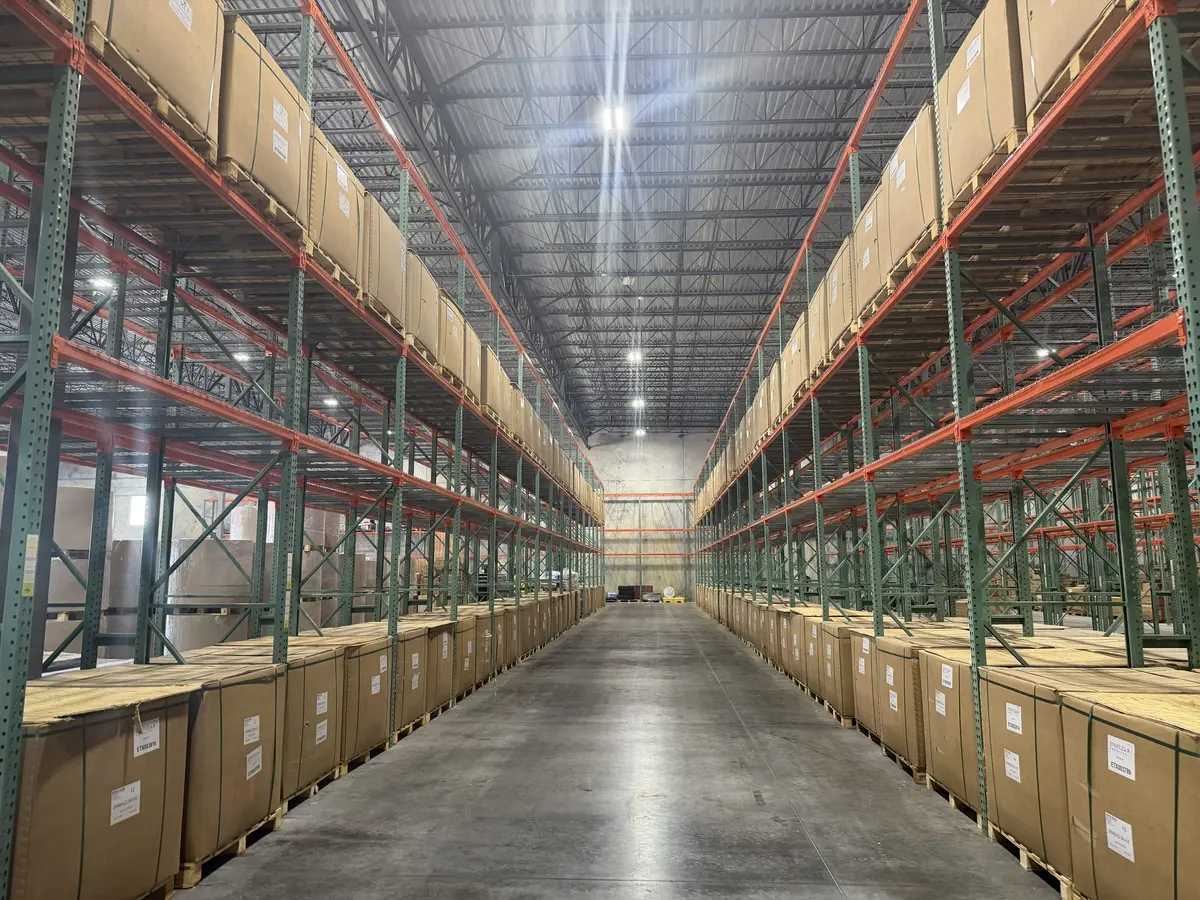
The system a teardrop profile describes. Direct access to every pallet position, adjustable beam levels, and the baseline every other rack type trades against.
Learn More →
Pallet Rack Components
Uprights, beams, safety clips, wire decking, row spacers, anchors, and load signage, matched to the engineered configuration you already have.
Learn More →
Rack Protection
Column guards and end-of-aisle protection, sized to the column profile they wrap and to the forklift fleet that runs the aisle.
Learn More →FAQ
Common Questions
What is teardrop pallet rack?
Teardrop pallet rack is roll-formed selective pallet racking whose upright columns are punched with teardrop-shaped slots. The beam ends in a connector with matching tabs that drop into those slots and seat under load, with no bolts at the joint, and a safety clip pins the connector so an upward strike cannot lift the beam out. The name describes the shape of the punched slot, which is round at one end and tapers to a narrow neck. It is a connector style rather than a separate storage system, so everything else about it works the way selective pallet racking works.
Are teardrop pallet racks universal?
No, and this is the most expensive assumption in the category. Teardrop is the most common profile in North American warehouses, which is why parts from different sources often look like they fit each other. Connector dimensions, slot spacing, and frame depths still vary enough that components which appear interchangeable are not engineered together. Older beams with rounded pins in particular do not fit newer frames with narrower openings. Verify against the drawings and against the installed steel before mixing anything into an existing run. Our used versus new racking guide covers what goes wrong when brands get mixed, and pallet rack components covers how replacement parts get matched to an engineered configuration.
What is the difference between teardrop and structural pallet rack?
The connection. Teardrop beams are roll-formed and boltless: the connector tabs seat in a punched slot and lock with a clip. Structural beams are hot-rolled channel sections bolted to the upright, with an open C-profile rather than a closed tube. Structural earns its extra cost in three places. Freezers, coolers, and wash-down areas, where the open profile lets water drain and dry instead of trapping moisture inside a tube. Aisles where forklift contact is routine, because the heavier section absorbs impact that bends roll-formed steel. And very heavy or concentrated loads. Roll-formed teardrop is lighter, less expensive, and faster to reconfigure, which is why it is the default for ambient distribution. We match the profile to your temperature zone, moisture exposure, and traffic rather than defaulting to one. Our structural vs. roll-formed comparison covers the decision in full.
What size uprights do teardrop racks use?
3"×3" columns are the most common profile in the field, on frames 36" to 48" deep and 8' to 40'+ tall. Those are starting points rather than a specification. Column size and steel gauge together with frame height set what the frame carries, and a published capacity assumes a specific upright height, beam span, number of levels, anchor spec, and seismic zone. On an existing system, measure the column and the frame depth off the installed bays rather than trusting the original order. Our pallet rack dimensions and sizes guide covers how each of the four core dimensions gets derived.
Does teardrop pallet rack need a permit?
Often, and the connector style has nothing to do with it. Permits are triggered by storage height and by what is being stored. Many jurisdictions require a building permit for storage racks above a set height, and a separate high-piled storage permit once commodity type and quantity cross local fire code thresholds, which most warehouse installations do. Seismic regions add engineered anchorage calculations stamped by a licensed engineer. Thresholds are set locally, so the same rack can be exempt in one county and fully permitted in the next. We handle drawings, calculations, and submittals as part of the project. Our warehouse racking permits guide lays out the thresholds by jurisdiction.
What drives the cost of teardrop pallet rack?
Upright height and column gauge, beam length and rated capacity per pair, and total pallet position count do most of it, since those set how much steel the system takes. After that: how much decking and safety hardware the installation calls for, new versus used components, seismic engineering and permitting in your jurisdiction, freight to the site, and whether installation has to work around live operations or happen after hours. Two buildings holding the same number of pallets can land a long way apart on total cost because of permitting and install conditions. Our pallet racking cost guide walks through how a racking quote is actually built. Send us your details through contact and we will scope it.
Get a Quote
Get a Quote on Teardrop Pallet Rack
Tell us your building and storage goals. We come back within one business day with a layout concept and a budget number, design, permits, and installation included.
- Free site assessment and layout
- Permits and PE-stamped drawings included
- Vetted, insured installation crews
Request a Free Quote
One business day response. No obligation.
Need Teardrop Rack That Matches What You Already Have?
Send us the frame depth, column size, and beam profile off your existing bays, or the pallet and building dimensions for a new system, and we will spec it. Free consultation, no obligation.
Schedule a Free Consultation